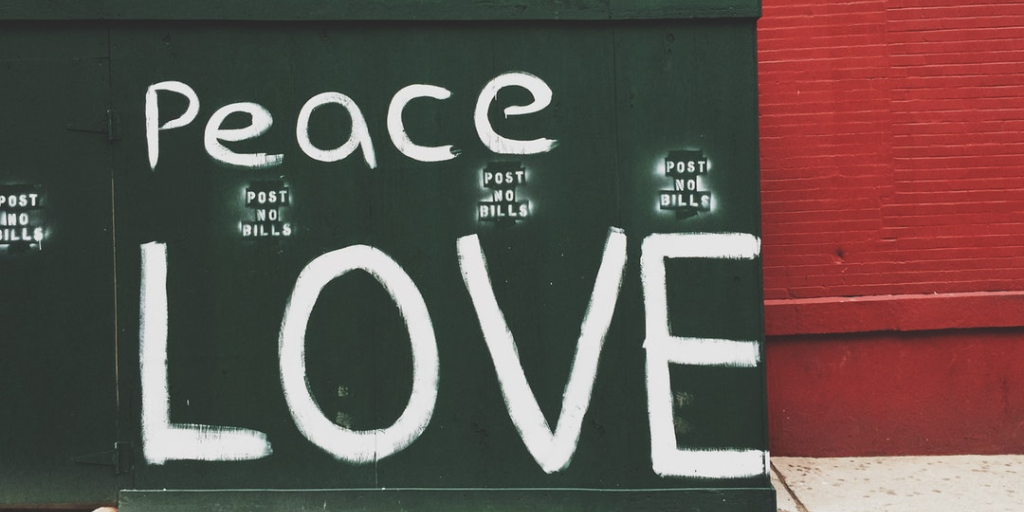
Does Peace = An Open Heart?
A reflective essay on choosing to love fully despite inevitable pain, the profound peace found in surrendering to love, and whether lasting peace is simply an open heart held within a carefully constructed boundary.

A reflective essay on choosing to love fully despite inevitable pain, the profound peace found in surrendering to love, and whether lasting peace is simply an open heart held within a carefully constructed boundary.
A personal essay on the author’s discomfort with religion, growing up between Methodist and Southern Baptist relatives, and how the same texts are used to justify both love and hate — while sensing a shared truth buried beneath historical context.
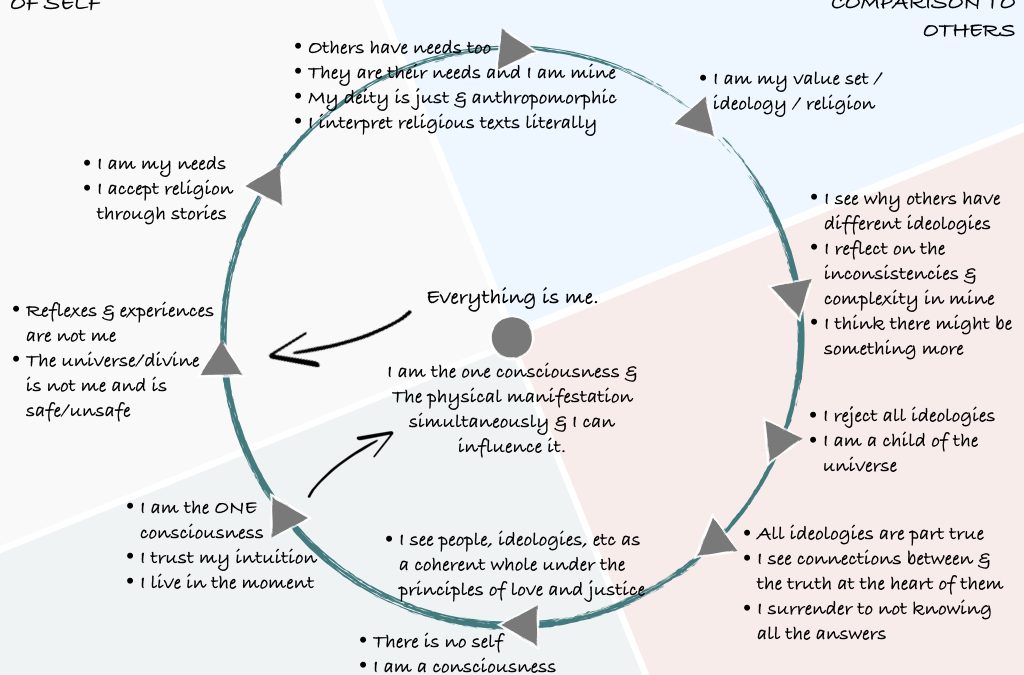
An exploration of whether particular life challenges map to specific stages of the author’s development model, finding that some stages attract characteristic struggles while other challenges can strike anytime and pull a person back into earlier stages.

A practical guide offering several methods for discovering your unique purpose or mission — including free-flow writing, the four-way intersections exercise, skills assessments, and quiet meditative listening — with the reminder that your purpose will not resemble anyone else’s.

A cataloged master list of the roughly sixty most common challenges humans face across mental, emotional, physical, social, financial and whole-life categories, compiled from thousands of survey responses to show how universal and finite our struggles really are.

A teaching essay on why self-understanding matters even amid ordinary chores and human suffering, arguing that developing to later stages of understanding lets you shape your own reality, and starting with the question of what you truly want to feel.
A practical, personal walkthrough of a belief-retraining process: identifying stressors, writing corrective perspectives for each, and distilling them into daily affirmations read for a month to replace limiting beliefs with healthier mindsets and behaviors.
A teaching essay on the danger of accepting labels for our core self, from others or from ourselves — distinguishing real, learnable skills from an ever-changing ‘self’ that doesn’t truly exist, and warning how borrowed labels become limiting beliefs.
A teaching essay proposing that the eleven stages of human development are not a linear staircase but a cycle we traverse repeatedly, with affirmations and daily reminders for spending more time in the later, more peaceful stages.
An overview essay aligning the developmental research of Kegan, Fowler and others into a single eleven-stage cycle spanning social, religious and spiritual growth, described as a circle we travel repeatedly rather than a staircase we climb.