
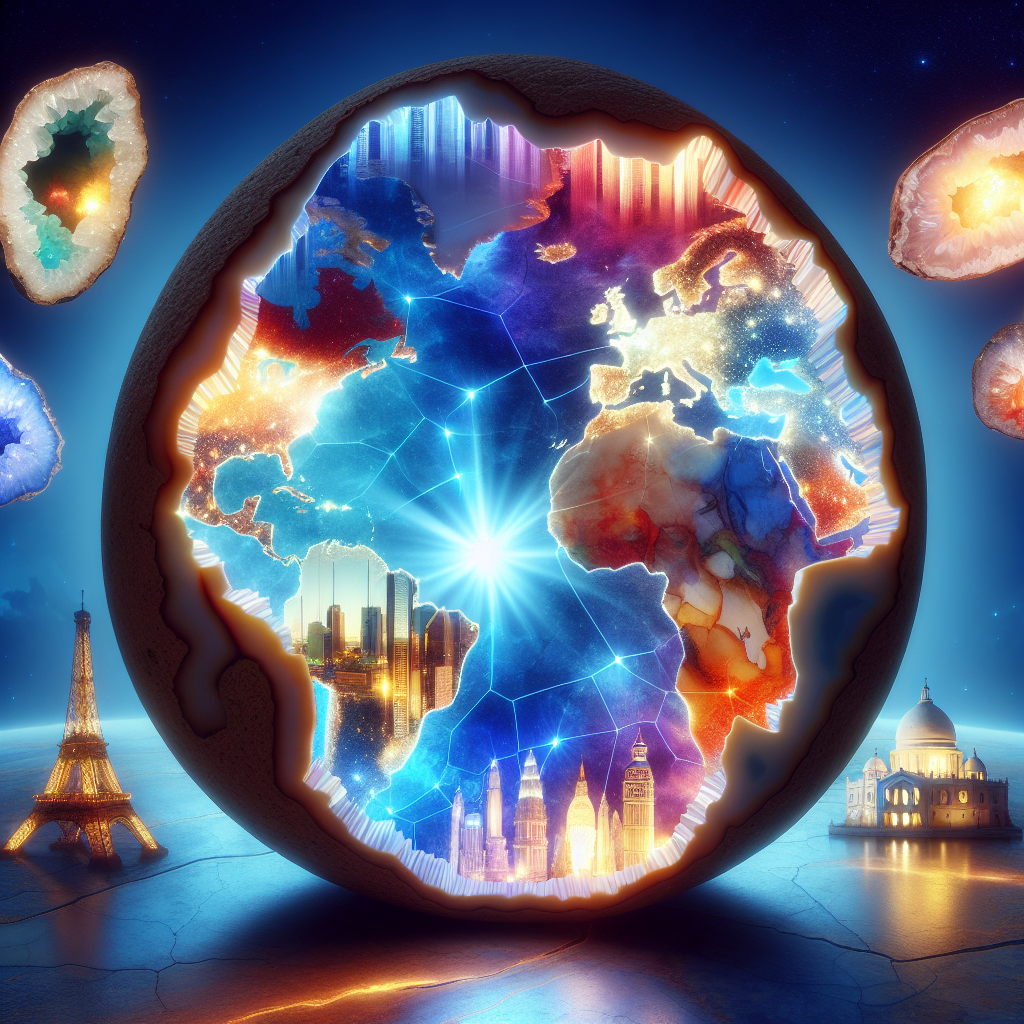
The Future of Blockchain: One Chain or an Internet of Chains?
Today, I want to dive into a hotly debated topic that’s been creating ripples in the blockchain community: the idea of a “one chain to rule them all” versus the concept of a distributed Internet of Chains.
While many enthusiasts believe we will eventually consolidate down to a single dominant blockchain, I find myself firmly placed in the camp advocating for an interconnected ecosystem of multiple chains. So, let’s explore both sides of this argument, the implications of each approach, and what I believe the future holds for us.
The Case for One Chain
The notion of consolidating to a single blockchain is similar to what we’ve seen in various industries. In an overcrowded space, competition can drive consolidation. Take the evolution of businesses within tech, for example. Just as countless startups were born in the internet boom, many chains have emerged in the blockchain realm, each claiming to have unique capabilities.
Currently, we have a plethora of chains like Bitcoin, Ethereum, Solana, Cardano, Geode, and Polkadot, all offering different features—some are faster, others are more secure, and a few can handle larger datasets. They are all vying for a share of the same small market, primarily composed of web3 developers and crypto enthusiasts. Should the adoption of blockchain technology remain confined to this limited audience, it is conceivable that we may witness a dominance of one chain, perhaps Ethereum, or any other leading chain that stands out based on its technical specifications and user interface.
However, for this scenario to play out, we must consider that the blockchain ecosystem would never expand beyond its current limited market. This perspective does not resonate with me.
A Historical Parallel: The Internet Evolution
The world of web3 parallels the early days of the internet. Back in the 90s, only a tiny fraction of the population was familiar with the internet, and those who were, were often labeled as “tech nerds.” Today, that landscape has dramatically transformed, with billions of people engaging online. This change was not overnight, but it underscores a vital point: as technology becomes more accessible and user-friendly, widespread adoption becomes inevitable.
In my view, blockchain’s widespread adoption will be swifter and more profound than that of its predecessors. Thanks to the infrastructure established by Web 2.0, we have a more robust groundwork that will support and accelerate the transition to Web 3. Projects like Geode are already actively working to pave the way for greater user onboarding, and I foresee a tidal wave of blockchain adoption within the next decade.
The Distributed Internet of Chains: A More Sustainable Vision
Now, let’s turn our attention to the case for a decentralized Internet of Chains. Imagine an environment where thousands of interconnected chains communicate with one another, each fulfilling its specialization. Isn’t that a thrilling prospect? This orientation not only retains decentralization but also enhances the security and resilience of the entire system against attacks.
We need to consider the future needs of humanity. Transitioning billions of users from Web 2.0 to a blockchain space means handling monumental amounts of data and transactions daily. Can one chain really shoulder the entirety of those responsibilities? I have my doubts. If we continue to crowd a single chain with requests, the rising transaction fees could become a barrier to entry, akin to a black hole sucking in resources until nothing remains.
Moreover, each chain has its unique strengths. For example, certain chains are built for speed and efficiency, making them ideal for cross-border payments and real-time transactions. Others prioritize security, making them better suited for sensitive applications like international trade or legal documentation. Games and immersive environments will require chains engineered for heavy computational tasks. Thus, a single chain could become a bottleneck rather than a solution.
The Internet of Chains offers a plethora of advantages, including enhanced capacity for handling diverse needs, more affordable transaction costs due to competition, and robust resilience through decentralization that diminishes the risk of a single point of failure.
Choosing a Path Forward
Ultimately, what stands in the way of either a singular dominant chain or a thriving internet of chains? The answer lies in user adoption. For us to realize the full potential of a decentralized ecosystem, we need widespread understanding and acceptance of blockchain technology.
I am genuinely excited about our collective journey toward this decentralized future because I firmly believe we will arrive at a point where Web 3.0 can accommodate billions just as Web 2.0 has done. I envision this happening within the next ten years, and I encourage you to share your timelines and thoughts as well.
In closing, it bears repeating that the vision for our blockchain future can take many shapes. My guiding principle lies in the belief that a distributed Internet of Chains will lead us to a more secure, inclusive, and efficient future. Join me in fostering this dialogue, sharing ideas, and shaping our blockchain narrative—we’re all in this together.
Thank you for traveling this path with me today. I look forward to hearing your thoughts, questions, and ideas.